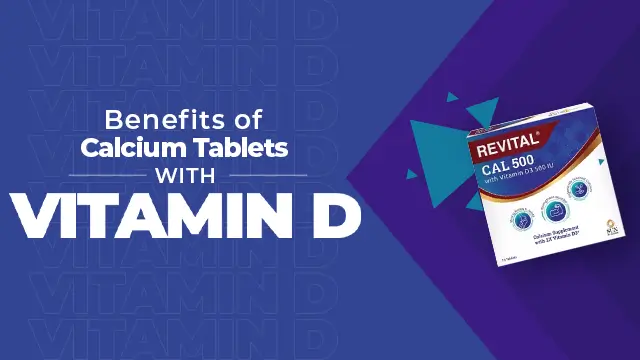
You may not think about your bones every day. That is fair. They work quietly in the background while you move, lift, rest and recover. But without enough calcium, your bones slowly begin to weaken. Not in ways you notice immediately. It is gradual. Subtle. Easy to ignore.
Most people believe they are getting enough calcium from their food. Some do. Many do not. Even fewer realise that calcium cannot work well without vitamin D. The body depends on both. When one falls short, the other becomes less useful. That is where calcium tablets with vitamin D become essential. They are not just for the elderly. They are not only for athletes or pregnant women. They are for anyone whose body is quietly falling behind. Let us take a closer look.
What Are Calcium Tablets?
Think of calcium tablets as nutritional tools. You use them when your daily diet is not meeting the body’s need for calcium. That need is constant. The body does not store excess calcium for later. What you eat today supports how your bones hold you up tomorrow.
These tablets contain a measured amount of calcium, often combined with vitamin D. That pairing matters. Vitamin D does not just improve calcium use. It enables it. Without it, calcium cannot move efficiently from the gut into the bloodstream.
So if you eat calcium-rich food but lack vitamin D, the calcium may pass through unused. A supplement that contains both helps solve that problem in one step.
Top Benefits of Calcium Tablets
Strengthening Bones and Teeth
There is one word you hear often in conversations around calcium, i.e., the bones. Yes, calcium protects bone density. Yes, it delays bone loss with age. But the list of benefits is longer. Additionally, appropriate calcium intake also enhances and boosts overall teeth and oral health.
Supporting Muscle Function
Calcium supports muscle activity. Every time your body moves, calcium plays a role in helping the muscles contract and relax. When calcium levels are too low, you may feel cramps or weakness, even if you think you are otherwise healthy.
Promoting Heart Health
Your heart also needs calcium. It helps regulate the way blood vessels expand and contract. That affects blood pressure and circulation. Then there is clotting. Your blood uses calcium to form clots when you are injured. It is a basic part of healing. Many people do not realise calcium is involved there too.
Assisting Nerve Function
For pregnant women, the benefits include reduced risk of preeclampsia, a condition tied to high blood pressure. For older adults, calcium may help in maintaining physical balance and avoiding fractures.
These are just a few reasons people take calcium tablets. But they work best when taken before a problem appears. Not after.
Who Should Take Calcium Supplements with Vitamin D
You do not have to be ill to need a supplement. You just need to be missing a gap you cannot always see. Some people avoid dairy. Others follow vegan diets. Many people reduce milk or cheese for health reasons. These choices are valid. But they reduce natural calcium intake. There are also people who eat well but cannot absorb nutrients effectively. This can happen with conditions like Crohn’s disease or coeliac disease. It can also happen quietly after years of poor digestion.
Certain medications affect calcium levels too. If you are on corticosteroids for a long time, your bones may weaken slowly unless supported. Some people lose calcium due to high salt or protein in the diet. The body flushes it out, unaware of the long-term cost. In these cases, calcium tablets with vitamin D are not optional. They are necessary. But they should be used responsibly. A healthcare provider can advise on timing and dose.
The Role of Vitamin D in Calcium Absorption
Vitamin D is not optional if you are trying to increase calcium levels. It plays a technical but vital role in helping your body absorb calcium through the intestines. When vitamin D is active, it triggers specific processes. It helps pull calcium into the cells of your gut. Then it helps move that calcium across those cells and into your bloodstream. This process has a name, i.e., active transcellular absorption. There is also a passive method, where calcium moves between the spaces in cells. Vitamin D plays a role in both.
When calcium levels in the blood drop, your body increases vitamin D production. That helps absorb more from food. If that does not work, the body begins pulling calcium from bones. That is not something you feel immediately. But over time, it takes a toll. Teeth may become sensitive. Bones may lose strength. Energy may drop. Taking calcium tablets with vitamin D helps avoid that cycle. It ensures that the calcium you consume is absorbed instead of wasted.
How Much Vitamin D and Calcium Do You Need?
Your needs vary depending on age. Adults between 19 and 50 usually need around 1,000 milligrams of calcium daily. After 50, the number often rises to 1,200 milligrams. This is true for both men and women, though women tend to lose bone mass more quickly after menopause.
There is also an upper limit. For most adults, that number is around 2,000 to 2,500 milligrams per day. More than that may not be safe unless prescribed. Vitamin D is measured differently. Most adults need 600 international units daily. That is around 15 micrograms. Sunlight helps your body make it naturally, but that depends on exposure, skin type and geography.
Some food provides vitamin D. Eggs, fortified milk and certain fish can help. But it is hard to meet full needs through food alone, especially if you spend most of your time indoors. A combined supplement often becomes the most practical option.
Causes for Vitamin D and Calcium Deficiency
Some causes are simple. You do not eat enough of the right foods. You do not get enough sun. You do not pay attention to small signs. Other causes are less obvious. Liver or kidney issues can prevent your body from converting vitamin D into its active form. That means calcium is not absorbed even if your intake is high.
People with obesity may also struggle with vitamin D. The nutrient can get trapped in fat cells, making it unavailable for use. Some medications can also interfere with absorption or accelerate calcium loss. Sometimes, even if you do everything right, your body still needs help. That is when supplements step in.
Symptoms of Vitamin D and Calcium Deficiency
You may not realise it, but your body gives clues.
- Do you wake up stiff? Do your legs cramp for no reason? Do your bones ache after a short walk? These could be signs.
- You might also feel tired. Not the kind that goes away with sleep. The kind that lingers. You may feel mentally foggy or notice more mood swings than usual.
- In children, low vitamin D can lead to rickets. In adults, it leads to slower recovery, higher risk of falls and reduced quality of life.
These symptoms may not appear together. But if two or more are familiar, it is worth checking your levels.
Conclusion
The benefits of calcium tablets go beyond strengthening bones. They help with muscle coordination, blood circulation and daily movement. But calcium alone is not enough. Without vitamin D, absorption drops. The pairing matters. Many people do not know they are deficient. Fewer take action early.
If your lifestyle limits dairy, sun exposure or digestion, you may need help. Calcium tablets with vitamin D offer a reliable way to stay ahead. We at Revital provide supplements designed for exactly that. They help you meet your daily requirements without making big changes to your routine.